
The Uncomfortable Truth: Understanding God's Wrath and Our Response
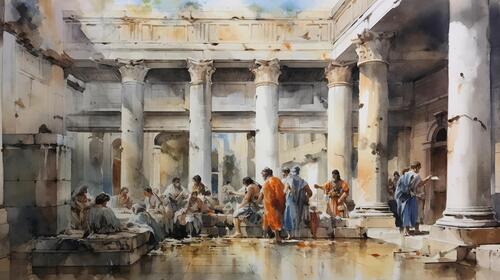
The Book of Romans stands as one of the most intellectually rigorous and spiritually profound letters in the New Testament. So compelling was Paul's argumentation that Ivy League law schools once studied Romans to teach students the art of constructing and defending a legal case. Today, we desperately need to return to this foundational text, especially as we navigate an increasingly confused culture.
The Wrath Nobody Wants to Talk About
"For the wrath of God is revealed from heaven against all ungodliness and unrighteousness of men who by their unrighteousness suppress the truth."
These words from Romans 1:18 rarely appear on decorative wall art or inspirational coffee mugs. We prefer the God of love, mercy, and grace—the comforting aspects of His character that make us feel warm inside. Yet the wrath of God should actually bring us comfort when properly understood.
God's wrath is not capricious anger or vindictive rage. It is His righteous, violent passion against evil. It is His unwavering commitment to justice. Would we really want a God who shrugs at murder, abuse, and oppression? Would we trust a judge who lets criminals walk free without consequence? God's wrath assures us that every wrong will be made right, that evil will not have the final word, that justice will ultimately prevail.
These words from Romans 1:18 rarely appear on decorative wall art or inspirational coffee mugs. We prefer the God of love, mercy, and grace—the comforting aspects of His character that make us feel warm inside. Yet the wrath of God should actually bring us comfort when properly understood.
God's wrath is not capricious anger or vindictive rage. It is His righteous, violent passion against evil. It is His unwavering commitment to justice. Would we really want a God who shrugs at murder, abuse, and oppression? Would we trust a judge who lets criminals walk free without consequence? God's wrath assures us that every wrong will be made right, that evil will not have the final word, that justice will ultimately prevail.
Two Types of Rebellion
Paul identifies two categories of human rebellion: ungodliness and unrighteousness. Ungodliness is the vertical problem—our relationship with God. It manifests in ignoring Him, rejecting Him, or replacing Him with idols. Unrighteousness is the horizontal problem—our relationships with each other. It is the injustice, immorality, and corrupt behavior that flows from pushing God aside.
This is a cause-and-effect relationship. When we remove God from the equation of our lives, unrighteousness inevitably follows. We might think we're morally decent people because we avoid the "big sins," but ungodliness is simply living day-to-day with little to no thought of God. And that ungodliness produces all manner of unrighteousness—not just murder and theft, but gossip, envy, disobedience, and slander.
This is a cause-and-effect relationship. When we remove God from the equation of our lives, unrighteousness inevitably follows. We might think we're morally decent people because we avoid the "big sins," but ungodliness is simply living day-to-day with little to no thought of God. And that ungodliness produces all manner of unrighteousness—not just murder and theft, but gossip, envy, disobedience, and slander.
The Evidence Everyone Has
One of the most challenging theological truths in Romans 1 is this: everyone knows God. Not with the depth of special revelation found in Scripture, but through general revelation visible in creation itself. Paul writes that God's "invisible attributes, namely his eternal power and divine nature, have been clearly perceived ever since the creation of the world in the things that have been made."
This goes far beyond admiring sunsets and mountains. Creation reveals four self-evident truths:
Existence - The law of causality tells us you cannot give what you do not have. Life cannot come from non-life. Consciousness cannot emerge from non-consciousness. The existence of life demands an eternal, living Creator.
Order - Natural laws govern our universe with precision. From the genetic code in DNA—more complex than a thousand encyclopedias—to the anthropic principles that make life possible (Earth's exact oxygen levels, rotation speed, distance from the sun, and over 100 other precisely calibrated factors), design screams for a Designer.
Dignity - Humans possess inherent worth that transcends animal life. We instinctively know that human life carries greater value, that we are morally accountable in ways animals are not. This dignity points to a Creator who endowed us with His image.
Righteousness - A moral law is written on every heart. Even those without biblical instruction know murder is wrong. The thief does not want to be stolen from. The adulterer does not want his spouse taken. A universal moral law demands a moral lawgiver.
These truths are "plain," "graspable," and "made evident" to everyone. We are all without excuse.
This goes far beyond admiring sunsets and mountains. Creation reveals four self-evident truths:
Existence - The law of causality tells us you cannot give what you do not have. Life cannot come from non-life. Consciousness cannot emerge from non-consciousness. The existence of life demands an eternal, living Creator.
Order - Natural laws govern our universe with precision. From the genetic code in DNA—more complex than a thousand encyclopedias—to the anthropic principles that make life possible (Earth's exact oxygen levels, rotation speed, distance from the sun, and over 100 other precisely calibrated factors), design screams for a Designer.
Dignity - Humans possess inherent worth that transcends animal life. We instinctively know that human life carries greater value, that we are morally accountable in ways animals are not. This dignity points to a Creator who endowed us with His image.
Righteousness - A moral law is written on every heart. Even those without biblical instruction know murder is wrong. The thief does not want to be stolen from. The adulterer does not want his spouse taken. A universal moral law demands a moral lawgiver.
These truths are "plain," "graspable," and "made evident" to everyone. We are all without excuse.
The Downward Spiral
What happens when people suppress this truth? Romans 1 traces a devastating progression:
Rejection (v. 21) - "They did not honor him as God or give thanks to him." People actively reject the evidence before them.
Reason (v. 21b) - "They became futile in their thinking, and their foolish hearts were darkened." They construct elaborate justifications for their rejection.
Replacement (v. 23) - "They exchanged the glory of the immortal God for images resembling mortal man and birds and animals and creeping things." Notice the declining progression—from God to humans to birds to animals to reptiles. When we remove God, we do not ascend; we descend.
Reprobation (v. 24, 26, 28) - Three times Paul writes "God gave them up." This is the terrifying reality of divine wrath—God eventually says, "Have it your way." He never initiates rejection, but He will seal our rejection of Him.
Rejection (v. 21) - "They did not honor him as God or give thanks to him." People actively reject the evidence before them.
Reason (v. 21b) - "They became futile in their thinking, and their foolish hearts were darkened." They construct elaborate justifications for their rejection.
Replacement (v. 23) - "They exchanged the glory of the immortal God for images resembling mortal man and birds and animals and creeping things." Notice the declining progression—from God to humans to birds to animals to reptiles. When we remove God, we do not ascend; we descend.
Reprobation (v. 24, 26, 28) - Three times Paul writes "God gave them up." This is the terrifying reality of divine wrath—God eventually says, "Have it your way." He never initiates rejection, but He will seal our rejection of Him.
Living Out Our Theology
When God gives people up, He hands them over to three consequences: the lusts of their hearts leading to impurity, dishonorable passions, and a depraved mind. The text specifically addresses homosexuality as exemplifying humanity's rejection of both God's creative design and covenantal design for sexuality.
This is uncomfortable territory, but we must be clear: all sexual activity outside the covenant of marriage between one man and one woman is sin. This includes fornication, adultery, and homosexuality. The degradation of sexual ethics in our culture reflects God's wrath—allowing people to live out their theology of self-worship.
Yet clarity on sin must be matched with clarity on grace.
This is uncomfortable territory, but we must be clear: all sexual activity outside the covenant of marriage between one man and one woman is sin. This includes fornication, adultery, and homosexuality. The degradation of sexual ethics in our culture reflects God's wrath—allowing people to live out their theology of self-worship.
Yet clarity on sin must be matched with clarity on grace.
Grace, Truth, and the Church's Response
For those outside the church, living without a saving relationship with Jesus, our posture must be one of radical welcome. We are not called to condemn but to point people to the Savior. Transformation is the Holy Spirit's job, not ours. We are notoriously bad at playing Holy Spirit in other people's lives—whether with strangers, friends, or even our own spouses and children.
However, the church must hold a different standard for those within the body of Christ who claim to follow Jesus while living in unrepentant sin. We cannot approve what God condemns. We cannot affirm what Scripture clearly identifies as sinful. The degradation of churches that now celebrate what God's Word prohibits is more concerning than the brokenness we see in the world.
However, the church must hold a different standard for those within the body of Christ who claim to follow Jesus while living in unrepentant sin. We cannot approve what God condemns. We cannot affirm what Scripture clearly identifies as sinful. The degradation of churches that now celebrate what God's Word prohibits is more concerning than the brokenness we see in the world.
Salt That Has Not Lost Its Savor
The church is called to be the salt of the earth—a preserving influence that prevents rot. But when the church loses its saltiness, when it becomes weak on both grace and truth, it can no longer preserve. Instead, it becomes part of the rotting culture it was meant to redeem.
Standing firm is costly. It always has been. The early church stood with their voices and their presence, often paying with their lives. They used no swords or stones, only the proclamation of truth. We want the world they created without the sacrifice they made.
The call today remains unchanged: Go and make disciples. Love broken people. Stand firm in truth. Be the light in the darkness. And trust that the gospel is still the power of God for salvation to everyone who believes.
The question is not whether God will remain faithful to His mission. The question is whether we will.
Standing firm is costly. It always has been. The early church stood with their voices and their presence, often paying with their lives. They used no swords or stones, only the proclamation of truth. We want the world they created without the sacrifice they made.
The call today remains unchanged: Go and make disciples. Love broken people. Stand firm in truth. Be the light in the darkness. And trust that the gospel is still the power of God for salvation to everyone who believes.
The question is not whether God will remain faithful to His mission. The question is whether we will.
Recent
A Life Marked by the Gospel: What It Looks Like to Truly Follow Jesus
September 28th, 2026
Every Part Matters: Understanding Your Place in the Body of Christ
September 14th, 2026
The God Who Keeps His Word: Hope, Hardening, and the Unfolding Plan of Redemption
August 31st, 2026
When God Does Not Give Up: Grace, Humility, and the Certainty of Hope
August 24th, 2026
The Beautiful Feet of Ordinary People: Why the Gospel Needs You
August 17th, 2026
Archive
2026
March
April
May
June
July
August
No Comments