
The Unshakable Evidence: Why the Resurrection Changes Everything
Have you ever wondered if your faith rests on solid ground? In a world that constantly demands proof, evidence, and verification, it's natural to question whether Christianity stands up to scrutiny. The beautiful truth is this: the resurrection of Jesus Christ isn't a fairy tale or wishful thinking—it's one of the most well-documented events in ancient history.
The Power of Early Testimony
Imagine hearing about a major event just days after it happened, from people who were actually there. That's exactly what we find with the resurrection. The earliest Christian creed, found in 1 Corinthians 15, dates to just two to five years after Jesus's crucifixion. Paul writes: "For I delivered to you as of first importance what I also received: that Christ died for our sins in accordance with the Scriptures, that he was buried, that he was raised on the third day in accordance with the Scriptures."
This wasn't a legend that developed over centuries. This was immediate, eyewitness testimony being passed down while people who saw Jesus alive could still be questioned. Paul even mentions that Jesus appeared to more than 500 people at once, "most of whom are still alive." In other words: "Don't believe me? Go ask them yourself."
The timeline is stunning. Jesus was crucified around AD 30-33. Paul was converted just two to three years later. He received this creed shortly after, visited Peter in Jerusalem to verify his message, and then wrote it down in 1 Corinthians around AD 55. We're talking about a 25-year window—a period where many of us can remember events clearly.
This wasn't a legend that developed over centuries. This was immediate, eyewitness testimony being passed down while people who saw Jesus alive could still be questioned. Paul even mentions that Jesus appeared to more than 500 people at once, "most of whom are still alive." In other words: "Don't believe me? Go ask them yourself."
The timeline is stunning. Jesus was crucified around AD 30-33. Paul was converted just two to three years later. He received this creed shortly after, visited Peter in Jerusalem to verify his message, and then wrote it down in 1 Corinthians around AD 55. We're talking about a 25-year window—a period where many of us can remember events clearly.
The Empty Tomb Nobody Could Explain
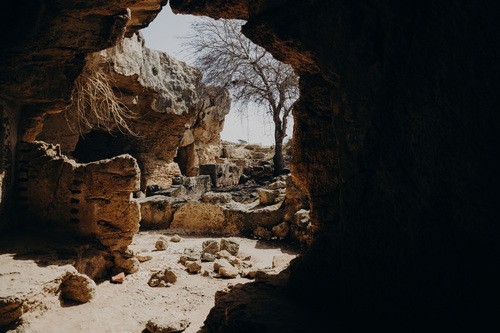
An empty tomb might seem like a simple detail, but it's actually one of the most powerful pieces of evidence. If Jesus's body had been anywhere—anywhere at all—the early Christian movement would have been crushed instantly. All the religious leaders had to do was produce the body, and Christianity would have died before it began.
But they couldn't.
What makes this even more compelling is where this happened: Jerusalem, the center of Jewish culture and authority. This wasn't some remote location where claims couldn't be verified. This was the worst possible place to fabricate a resurrection story if it wasn't true. Everyone could walk to the tomb. Everyone knew where it was—Joseph of Arimathea's burial site, a wealthy and well-known member of the Sanhedrin.
Here's a fascinating detail: the first witnesses were women. In first-century Jewish culture, a woman's testimony wasn't given the same weight as a man's in legal matters. If you were inventing a story to convince people, you would never, ever make women your primary witnesses. But that's exactly what the Gospel writers recorded—because that's what actually happened. This "embarrassing detail" points to authenticity, not fabrication.
But they couldn't.
What makes this even more compelling is where this happened: Jerusalem, the center of Jewish culture and authority. This wasn't some remote location where claims couldn't be verified. This was the worst possible place to fabricate a resurrection story if it wasn't true. Everyone could walk to the tomb. Everyone knew where it was—Joseph of Arimathea's burial site, a wealthy and well-known member of the Sanhedrin.
Here's a fascinating detail: the first witnesses were women. In first-century Jewish culture, a woman's testimony wasn't given the same weight as a man's in legal matters. If you were inventing a story to convince people, you would never, ever make women your primary witnesses. But that's exactly what the Gospel writers recorded—because that's what actually happened. This "embarrassing detail" points to authenticity, not fabrication.
When Ancient History Speaks
The New Testament isn't just spiritually reliable—it's historically unparalleled. Consider this: we have over 5,800 Greek manuscripts of the New Testament. Add other ancient languages, and that number jumps to over 20,000 manuscripts. The accuracy? An astonishing 99.5%.
Compare that to other ancient works. We have only seven copies of Pliny's writings with a 750-year gap between the original and earliest copy. Plato? Seven copies with a 1,200-year gap. Julius Caesar? Ten copies with a 1,000-year gap. The New Testament? A 30-year gap with thousands of manuscripts.
The New Testament is the best-attested work of ancient literature—period. It's not even close.
Compare that to other ancient works. We have only seven copies of Pliny's writings with a 750-year gap between the original and earliest copy. Plato? Seven copies with a 1,200-year gap. Julius Caesar? Ten copies with a 1,000-year gap. The New Testament? A 30-year gap with thousands of manuscripts.
The New Testament is the best-attested work of ancient literature—period. It's not even close.
The Transformation That Demands Explanation
Perhaps the most powerful evidence isn't found in manuscripts or tombs, but in transformed lives. Consider Peter: a rough fisherman who threw punches when threatened, yet denied Jesus three times when confronted by a servant girl. He ran away terrified.
Fifty days later, this same man stood before the very people who crucified Jesus and boldly proclaimed the resurrection. He was beaten for his faith and walked away praising God that he could suffer like his Lord. What could possibly account for that transformation?
Or take James, Jesus's own half-brother. Throughout Jesus's ministry, James didn't believe. His family thought Jesus was out of his mind. Yet after the crucifixion, we find James not just as a believer, but as the leader of the Jerusalem church. What changed? First Corinthians tells us: Jesus appeared to him after the resurrection.
Then there's Paul—actively hunting down and killing Christians. He was the last person anyone would expect to convert. Yet he gave up status, safety, and a promising career to follow the risen Christ. He was eventually beheaded for his faith.
Here's the critical question: Would you die for a lie? Would you watch your wife be killed and then face crucifixion yourself—when all you had to do was admit it was fake? Not one of the disciples recanted. Not one.
As Chuck Colson, who was involved in the Watergate scandal, observed: "Twelve of the most powerful men in the world couldn't keep a lie for three weeks. You're telling me twelve apostles could keep a lie for forty years? Absolutely impossible."
Fifty days later, this same man stood before the very people who crucified Jesus and boldly proclaimed the resurrection. He was beaten for his faith and walked away praising God that he could suffer like his Lord. What could possibly account for that transformation?
Or take James, Jesus's own half-brother. Throughout Jesus's ministry, James didn't believe. His family thought Jesus was out of his mind. Yet after the crucifixion, we find James not just as a believer, but as the leader of the Jerusalem church. What changed? First Corinthians tells us: Jesus appeared to him after the resurrection.
Then there's Paul—actively hunting down and killing Christians. He was the last person anyone would expect to convert. Yet he gave up status, safety, and a promising career to follow the risen Christ. He was eventually beheaded for his faith.
Here's the critical question: Would you die for a lie? Would you watch your wife be killed and then face crucifixion yourself—when all you had to do was admit it was fake? Not one of the disciples recanted. Not one.
As Chuck Colson, who was involved in the Watergate scandal, observed: "Twelve of the most powerful men in the world couldn't keep a lie for three weeks. You're telling me twelve apostles could keep a lie for forty years? Absolutely impossible."
The Theories That Fall Short
Over the centuries, skeptics have proposed alternative explanations. Maybe the disciples stole the body? But that doesn't explain their willingness to die for what they knew was a lie. Maybe Jesus didn't actually die? Medical evidence from the spear wound—blood and water separating—confirms death. Plus, Roman soldiers perfected crucifixion. They didn't make mistakes.
The most popular theory today is hallucination. But hallucinations aren't contagious. They don't happen to groups. They don't result in life transformation. And they certainly don't explain an empty tomb or convince a hostile persecutor like Paul.
Every naturalistic explanation fails to account for all the evidence. The simplest, most compelling answer remains: Jesus truly rose from the dead.
The most popular theory today is hallucination. But hallucinations aren't contagious. They don't happen to groups. They don't result in life transformation. And they certainly don't explain an empty tomb or convince a hostile persecutor like Paul.
Every naturalistic explanation fails to account for all the evidence. The simplest, most compelling answer remains: Jesus truly rose from the dead.
What This Means for You
Here's where evidence meets faith. You can know all these facts, understand all the arguments, and still miss the point. The resurrection isn't just a historical event to be studied—it's an invitation to be accepted.
Jesus didn't just claim to show the way; He claimed to be the way. He didn't just teach about God; He claimed to be God. And the resurrection is God's stamp of approval on every claim Jesus made.
The question before each of us isn't whether we can defend the resurrection intellectually. The question is: Have we applied the blood of the Lamb to our hearts? Have we moved from head knowledge to heart belief?
We are saved by grace through faith—that is the gift of God. The evidence is overwhelming, the invitation is clear, and the decision is yours.
Because Jesus walked out of that grave, we can walk in newness of life. Because He was the firstfruits of resurrection, we too will be raised. Death doesn't have the final word.
The tomb is empty. The evidence is clear. The question remains: Do you believe?
Jesus didn't just claim to show the way; He claimed to be the way. He didn't just teach about God; He claimed to be God. And the resurrection is God's stamp of approval on every claim Jesus made.
The question before each of us isn't whether we can defend the resurrection intellectually. The question is: Have we applied the blood of the Lamb to our hearts? Have we moved from head knowledge to heart belief?
We are saved by grace through faith—that is the gift of God. The evidence is overwhelming, the invitation is clear, and the decision is yours.
Because Jesus walked out of that grave, we can walk in newness of life. Because He was the firstfruits of resurrection, we too will be raised. Death doesn't have the final word.
The tomb is empty. The evidence is clear. The question remains: Do you believe?
Posted in Holy Week 2026
Recent
The War Within: Finding Freedom in Surrender
June 15th, 2026
Dying to Live: Understanding Your True Identity in Christ
June 8th, 2026
What Are You Allowing to Shape Your Life?
June 1st, 2026
Dead to Sin, Alive in Christ: Understanding Your New Identity
May 26th, 2026
The Champion Who Represents You: A Tale of Two Adams
May 18th, 2026
Archive
2026
March
April
May
No Comments